Why More People Are Replacing Spontaneous Weekend Plans With a Loose Monthly Theme That Shapes How They Spend and Unwind
Robert Kim
10/15/2026
5 min read
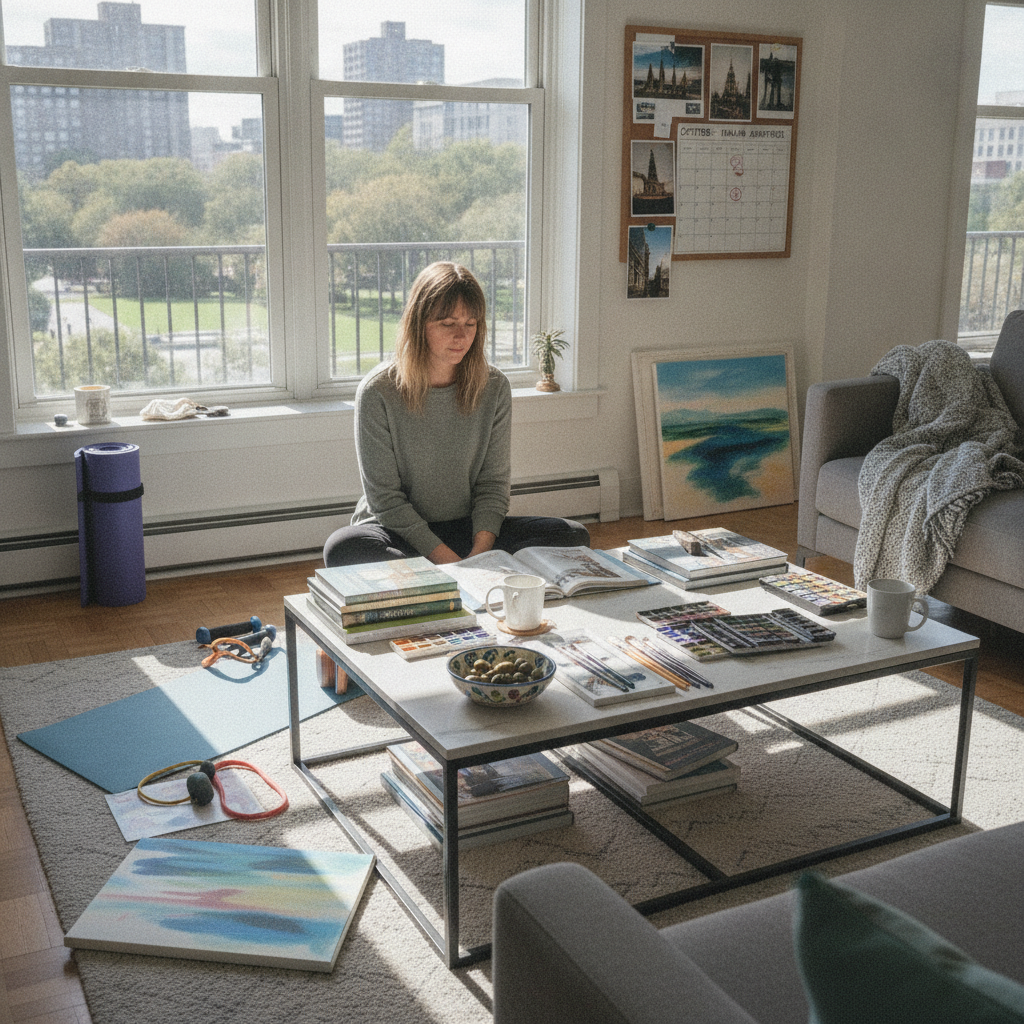
There is a particular kind of Sunday evening fatigue that has nothing to do with how much was accomplished. It arrives after a weekend that felt scattered — a last-minute drive somewhere, a dinner that cost more than expected, a string of small decisions that never quite cohered into anything satisfying. The plans weren't bad. They simply lacked a center of gravity.
A growing number of people have begun addressing this quietly, not with rigid schedules or elaborate systems, but with something far simpler: a loose monthly theme that gently organizes how they spend their time, money, and attention for a few weeks. It's less a productivity strategy than a philosophy of soft intention — a way of giving ordinary weekends a shape without removing their flexibility.
The Appeal of a Guiding Frame
The idea is straightforward enough. A household might designate one month as a period of culinary exploration, spending weekends cooking regional cuisines they've never attempted, visiting a Korean grocery in a nearby neighborhood like Koreatown, or watching documentaries about food traditions from other countries. The following month might carry a theme of local discovery — committing to exploring parks, markets, and streets within a short drive that have always been overlooked. The theme doesn't dictate every hour. It simply offers a direction when the weekend opens up and the usual question — what should we do — tends to invite a familiar, uninspired answer.
What makes this approach resonant is that it operates against the grain of what might be called hyperchoice fatigue — the exhaustion that comes from an overabundance of equally weighted options. When everything is possible, nothing feels particularly compelling. A monthly theme narrows the field just enough to make decisions feel purposeful rather than arbitrary, and that small shift has a surprisingly significant effect on how satisfying the time feels afterward.
How Spending Naturally Follows the Theme
One of the less obvious benefits of organizing leisure around a recurring theme is how it quietly reshapes spending patterns. Spontaneous plans have a well-known tendency to generate unplanned costs — the impulsive dinner reservation, the event tickets purchased at full price because the weekend arrived before any research did. A monthly theme introduces a kind of soft budgeting by default. When the month is centered on outdoor living, for example, spending flows toward a state park pass, a borrowed tent, and a few provisions from a place like REI's clearance section rather than scattering across a dozen unrelated purchases.
Apps like Notion or Cozi have become useful companions for households that track their monthly themes loosely — not as rigid planners but as places to collect ideas, note costs, and reflect on what worked. The act of writing down a theme at the start of the month, even informally, creates a reference point that spending decisions can orient around. It's a form of intentionality that doesn't require a spreadsheet or a budget meeting.
The Cultural Roots of Themed Living
This practice draws, perhaps unknowingly, from older cultural traditions. The Japanese concept of ma — the conscious use of pause and negative space — suggests that meaning is shaped as much by what surrounds an experience as by the experience itself. Monthly themes function similarly: they create a surrounding context that makes individual moments feel part of something larger. In Scandinavian cultures, the rhythm of the year has long been organized around seasonal sensibilities, with particular activities, foods, and social rituals clustering naturally around certain months. The modern adoption of a loose monthly theme is a secular, informal version of the same instinct — the recognition that life feels more textured when it has shape.
This is distinct from the hustle-culture idea of maximizing time. Monthly themes don't ask people to do more. They ask people to do things in a more connected way, so that a Saturday afternoon and a Sunday morning feel like chapters in the same story rather than random pages from different books.
What You Might Notice After a Few Months
If you try this, the changes tend to be subtle at first. A month spent with a theme of creative making — drawing, pottery, collage, whatever the medium — might begin with a beginner's class at a local studio and end with a small shelf of handmade objects that carry more meaning than anything purchased. A month of intentional rest, taking its cues from the Danish idea of hygge (a quality of coziness and contented togetherness), might involve nothing more ambitious than lighting candles, cooking slow meals, and reading more than usual. Neither month costs much. Both tend to leave people with a clearer sense of what they actually value.
The accumulation of themed months also begins to function as a kind of personal inventory — a record of what resonated and what didn't. People who return to certain themes find that they've quietly identified their actual interests, as opposed to the interests they assumed they had based on what their social feeds suggested they should enjoy. That distinction turns out to matter more than it initially seems.
The Sunday evening that opened this reflection — the one filled with vague dissatisfaction after a weekend without a center — becomes less common when the weekend has somewhere to point. Not a destination, exactly, but a direction. A loose theme doesn't promise a perfect month. It simply offers a reason to choose one thing over another, to let small decisions accumulate into something that resembles a life lived with a little more intention than yesterday.