Why Curating a Small Collection of Go-To Recipes Quietly Replaces the Mental Load of Deciding What to Cook Every Night
Robert Kim
09/21/2026
5 min read
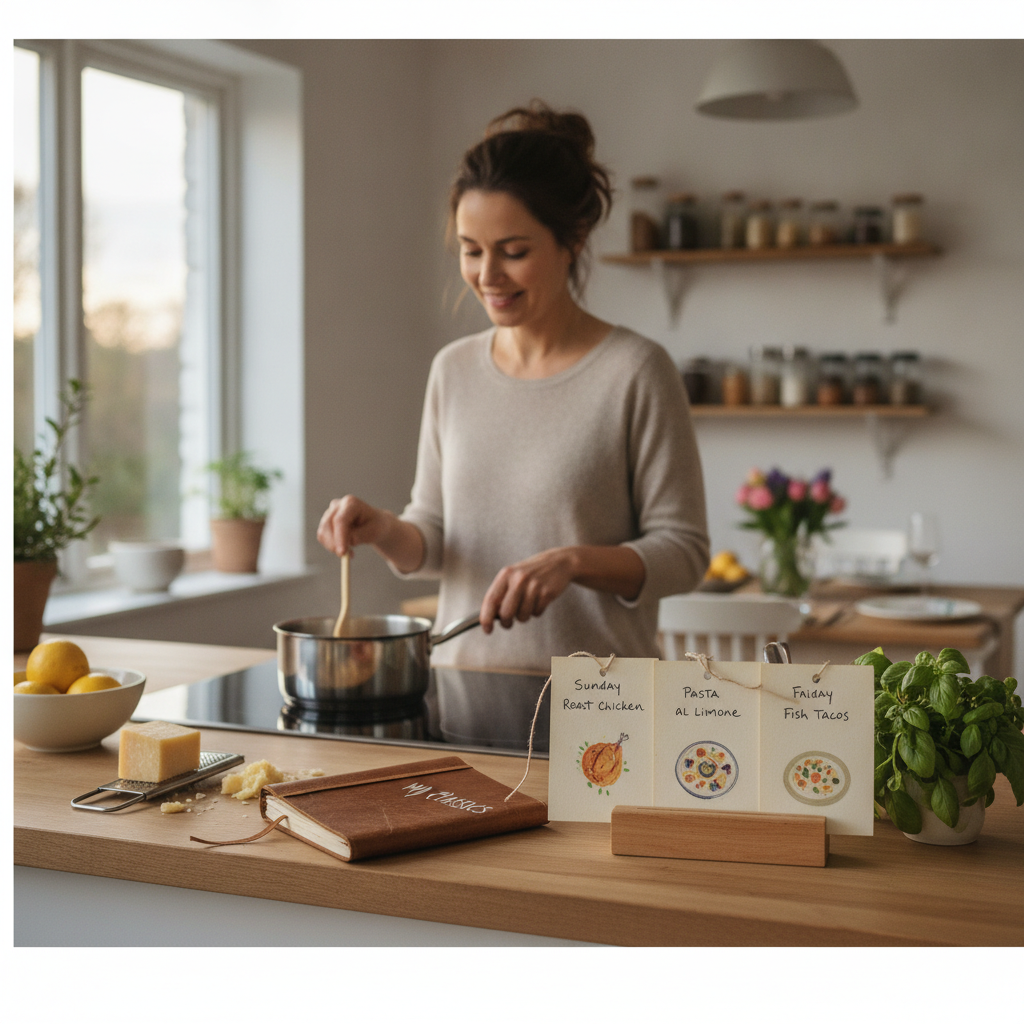
Decision fatigue is one of the quieter costs of modern domestic life, and nowhere does it accumulate more reliably than in the kitchen. By late afternoon, after a day of choosing and problem-solving and navigating whatever the world has asked of a person, the question of what to cook for dinner carries a weight that seems entirely disproportionate to what it actually is — a meal. Yet for millions of households, that small question becomes a genuine source of stress, leading to takeout orders, aimless pantry staring, or the kind of uninspired cooking that satisfies no one. The solution, it turns out, isn't a meal planning app or a rotating subscription box from services like HelloFresh or Green Chef. It's something quieter, older, and far less expensive: a small, personally curated repertoire of go-to recipes that a household knows by heart.
The Weight of Too Many Options
Behavioral economists have long observed what they call the paradox of choice — the counterintuitive phenomenon in which having more options produces less satisfaction, not more. This concept translates directly to the dinner table. A person who opens a recipe app and faces thousands of options is not empowered; they are paralyzed. The cognitive effort required to evaluate unfamiliar dishes, cross-reference available ingredients, estimate cooking time, and gauge whether a household will actually enjoy the result is substantial. When that process repeats every single evening, it becomes exhausting in a way that compounds quietly over weeks and months, eroding not just mealtime enjoyment but the broader pleasure of being at home.
What a Repertoire Actually Does
A personal recipe repertoire — borrowed from the French word meaning a stock of skills or works that a performer is ready to present — is fundamentally different from a recipe collection. A collection is aspirational: clipped articles, saved Instagram posts, cookbooks with cracked spines and barely touched pages. A repertoire is operational. It consists of eight to fifteen dishes a household can prepare without consulting instructions, adjusting by intuition, and serving with confidence. These are the meals that have been made enough times to feel natural: the weeknight pasta that comes together in twenty minutes, the sheet-pan chicken that requires almost no attention, the grain bowl that accommodates whatever vegetables are lingering in the crisper drawer. The repertoire doesn't dazzle; it functions.
The psychological effect of having this kind of internalized menu is significant. When the answer to "what's for dinner" can be drawn from a small, trusted pool rather than reconstructed from scratch each evening, the decision stops feeling like a decision at all. It becomes closer to a habit — and habits, unlike choices, require almost no mental energy to execute. This is the same principle that leads some high-functioning professionals to simplify their wardrobes or eat roughly the same breakfast each morning. Reducing the number of active choices in a day preserves cognitive resources for the decisions that actually matter.
Building Without Overthinking
Assembling a working repertoire is not a project that requires a weekend retreat or a color-coded spreadsheet. It begins with honest observation: which meals does a household return to naturally, without being prompted? These are already the foundation. From there, the repertoire expands slowly, by adding one unfamiliar dish every few weeks and cooking it repeatedly until it becomes comfortable. Recipe developers like Samin Nosrat, whose work centers on understanding flavor principles rather than memorizing steps, have long argued that cooking confidence comes from repetition rather than novelty. The goal isn't to master a hundred techniques; it's to fully own a dozen of them.
Cost is another reason the repertoire model rewards households who care about their grocery budget. Familiarity with a fixed set of dishes creates a predictable shopping list, which in turn reduces food waste — one of the more insidious ways grocery spending quietly exceeds what people expect. When a household knows it will make a lentil soup and a stir-fry and a roasted vegetable pasta this week, it buys accordingly, uses what it buys, and doesn't stand in front of the produce section making expensive, speculative choices.
The Cultural Logic of Everyday Cooking
Every food culture that has produced lasting culinary traditions understood this intuitively. In Japan, the concept of ichiju sansai — literally "one soup, three sides" — provides a structural template that removes the daily decision about what a meal should look like. The format is fixed; only the specific ingredients rotate with the season. In many Mediterranean households, the weekly rhythm of dishes is as predictable as the days themselves: a legume dish on Monday, a fish preparation on Friday, a slow-cooked meat on Sunday. These rhythms don't feel restrictive to the people living within them. They feel like home. The repetition is the comfort, not a limitation of it.
The Invitation to Start Small
If you find yourself staring into an open refrigerator at six in the evening, feeling not hungry exactly but tired of the question, the answer isn't to find more recipes. Start by writing down five meals your household already makes and enjoys. Cook each of them twice in the next month. Add one new dish only after those five feel genuinely automatic. Let the repertoire grow at the pace of real life rather than the pace of a meal planning system designed to sell subscriptions. Apps like Paprika or Mela can help organize the short list, but the tool matters far less than the commitment to keeping the list short. Over time, what emerges is something that costs almost nothing and returns something surprisingly valuable: the quiet relief of already knowing, before the day is over, exactly what dinner will be.
That relief is what the open refrigerator never offers, and what no meal kit subscription can manufacture — because it isn't a product. It's familiarity, built slowly, one repeated meal at a time.