The Hidden Markdown Timing Behind Brand-Name Bedding That Lets You Pay Half Price Without Hunting for Coupons
Jennifer Walsh
10/02/2026
5 min read
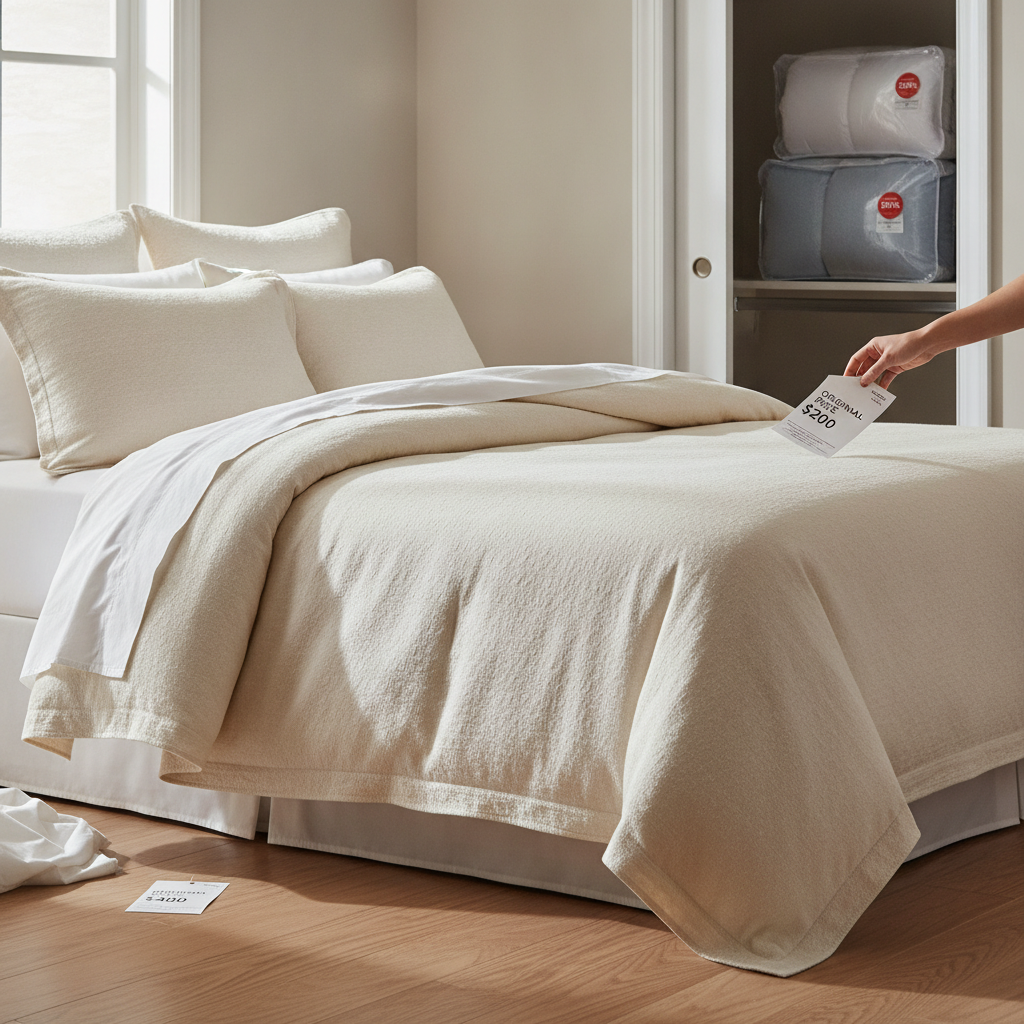
Brand-name bedding follows a predictable markdown rhythm that most shoppers never think to track — and that predictability is exactly what makes it so easy to exploit once you understand how retail calendars actually work. Retailers like Pottery Barn, Brooklinen, and Crate & Barrel don't slash prices randomly. Their discount cycles are structured around inventory management, seasonal transitions, and manufacturing timelines that repeat year after year with surprising consistency. Shoppers who understand this pattern routinely pay half the original ticket price without clipping a single coupon or waiting for a doorbusters sale.
How Retailers Plan Their Bedding Inventory Cycles
Department stores and home goods retailers order bedding collections months in advance, which means floor merchandise becomes a liability the moment a new season's lineup arrives. To clear shelf space and free up warehouse capacity, stores systematically mark down older inventory at predictable intervals. The transition between winter and spring is historically one of the most reliable markdown windows for bedding, as flannel sets, heavyweight duvets, and thermal blankets must move quickly to make room for lighter percale and linen collections. Understanding this supply-side pressure reveals why the discounts happen on schedule rather than in response to any particular sale event.
The Most Reliable Windows for Deep Bedding Discounts
The most consistent markdown windows for brand-name bedding fall in late January, mid-July, and early October. Late January capitalizes on post-holiday inventory gluts, when stores are simultaneously managing returns and making room for Valentine's Day home décor. Mid-July is equally powerful, as retailers begin clearing summer-weight sets to introduce fall collections. Early October tends to target luxury and hotel-grade bedding lines — brands like Parachute and Boll & Branch often align their clearance rotations with this window. These periods aren't advertised as sales events, which is precisely why the discounts often run deeper than the promotional markdowns that get the marketing budget behind them.
Why White Sales Aren't Always the Best Moment to Buy
The traditional January white sale — a marketing convention dating back over a century — has conditioned shoppers to equate January with the best bedding prices of the year. The reality is more nuanced. White sales are heavily promoted, which means retailers can afford to offer shallower discounts because foot traffic is already high. The unadvertised markdown that follows a white sale by two to three weeks, when unsold inventory still needs to clear, often reaches deeper price points with far less competition. Shoppers who wait out the promotional noise and check back in early February frequently find Egyptian cotton sheet sets and down-alternative comforters at prices the white sale couldn't match.
Reading the Clearance Section as a Timing Signal
A retailer's clearance section functions as a real-time signal of where the markdown cycle currently stands. When brand-name bedding begins migrating from the main floor to the clearance rack, that's typically the first markdown — often 20 to 30 percent off. A second clearance pass usually follows within three to six weeks, pushing the same items to 40 to 50 percent off, sometimes more. Checking clearance sections at Target, Macy's, or Nordstrom Rack every two weeks during a known markdown window lets shoppers track this progression without relying on email alerts or promotional calendars. Patience within a window, rather than waiting for the next one, is often the more rewarding strategy.
The Role of Thread Count and Fill Power in Timing Your Purchase
Higher-thread-count sheets and high-fill-power down comforters tend to carry longer markdown cycles because their initial price points are steep enough to discourage impulse buying even at first-pass discounts. This dynamic works in an informed shopper's favor. A 600-thread-count sateen set from a brand like Sferra or a 700-fill-power duvet from a premium retailer may sit at 25 percent off for several weeks before the clearance team pushes it to the deeper discount tier. The category's slower sell-through at the first markdown stage means quality items are often still available when the steeper reductions arrive — unlike fast-moving lower-tier bedding that disappears quickly after the initial cut.
How to Position Yourself to Catch the Best Price
Once you understand the rhythm, the approach is straightforward. Start by identifying one or two brands whose quality you trust — Brooklinen, Parachute, and Boll & Branch all have established clearance cycles worth tracking. Visit their online clearance sections or check major department store markdowns every ten days to two weeks during the three primary windows: late January, mid-July, and early October. Add items you're genuinely considering to wish lists so you can compare prices across visits rather than relying on memory. If an item has already received one markdown, check back within four weeks for the deeper reduction before committing. Avoid buying during heavily promoted sale events unless the clearance price is already at its second markdown level — the noise of a sale doesn't always translate to the best number on the tag. The discipline isn't about deprivation; it's about timing a purchase you were already planning to make.
Brand-name bedding pricing isn't arbitrary — it moves in cycles tied to inventory pressure, seasonal transitions, and retail calendar logic that repeats reliably year after year. Shoppers who recognize these patterns and adjust their timing accordingly consistently pay a fraction of the original price for the same quality items. No coupon stack, no email deal, and no flash sale required — just a working understanding of when the markdown machine naturally runs its course.