How Anchoring Your Home Around a Few Quality Pieces Changes the Way You Shop for Everything Else
Robert Kim
07/23/2026
5 min read
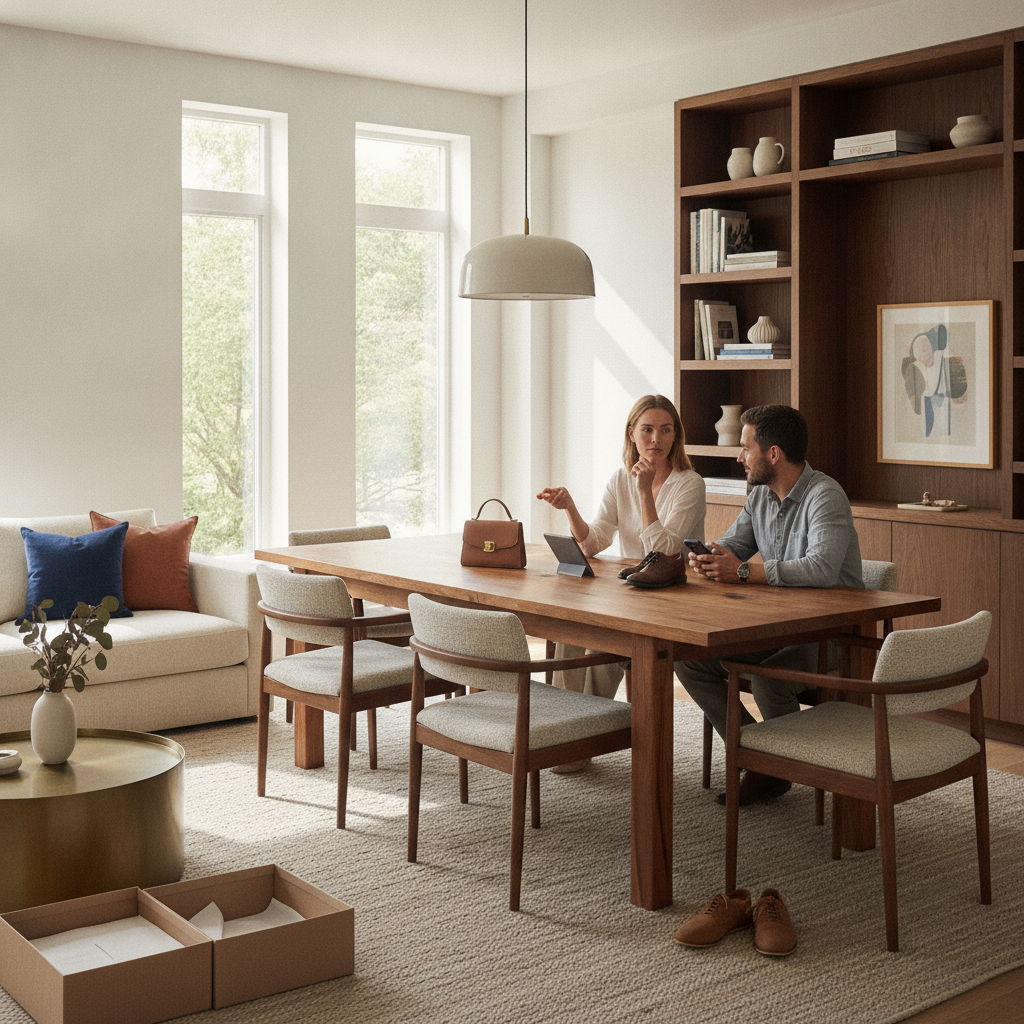
There is a particular kind of clarity that settles over a room when everything in it has earned its place. Not the sterile calm of a showroom, but something more lived-in and intentional — a space where a well-chosen sofa, a solid dining table, or a single piece of art seems to quietly organize the meaning of everything around it. That clarity, it turns out, isn't just aesthetic. It changes the way a person thinks about buying anything at all.
The Psychology Behind an Anchor Object
Designers and interior stylists have long used the term anchor piece to describe a dominant, high-quality item around which a room is built — a credenza, a statement chair, a hand-knotted rug from a place like Oaxaca or the Moroccan city of Beni Mellal. The anchor piece is rarely the cheapest item in the room, but its presence exerts a kind of gravitational pull on every purchase that follows. Once something of genuine quality exists in a space, the eye becomes calibrated to it. Inferior items start to feel conspicuous in a way they didn't before, and that recalibration turns out to be one of the most useful forces a thoughtful shopper can cultivate.
How One Good Purchase Sets a Standard
When someone invests in a piece like a IKEA BESTÅ system properly outfitted with solid wood doors, or a genuine Article sofa chosen after weeks of consideration, something subtle shifts in how they approach every subsequent decision for that room. The anchor piece becomes a reference point — a physical embodiment of what "good enough" actually looks like. Suddenly, the impulse buy at a discount retailer sits in a different light. The flimsy side table that once seemed passable now reads as out of step with the room's quiet ambition. This isn't snobbery; it's a natural recalibration of standards that actually saves money over time by reducing the churn of disposable purchases.
The Economics of Buying Around Quality
There's a counterintuitive financial logic at work here. Spending meaningfully on one or two anchor pieces tends to suppress spending on the surrounding clutter. When a room already feels complete and coherent — even if it isn't fully furnished — the urge to fill gaps with random acquisitions diminishes. The concept known in behavioral economics as satisficing, choosing what is genuinely sufficient rather than merely available, becomes easier when a clear standard already exists in the room. Brands like West Elm and Crate & Barrel have built entire merchandising strategies around this principle, encouraging customers to invest in a signature piece first and layer thoughtfully from there.
What Changes Beyond the Room Itself
The anchor philosophy doesn't confine itself to a single space. People who adopt it tend to carry the same logic into other categories entirely — clothing, kitchen tools, travel gear. Having once experienced the difference between a well-made cast iron pan and a cheap nonstick, or between a leather wallet that ages beautifully and one that falls apart in six months, a kind of spending patience develops. The urge to buy quickly, driven by novelty or a sale, softens. The question shifts from "is this affordable?" to "will this still make sense two years from now?" That reframing is, in practical terms, one of the most effective money-saving habits a person can develop.
Recognizing the Difference Between Anchor and Excess
Not every expensive item functions as an anchor. The distinction matters. An anchor piece earns its cost through longevity, versatility, and the way it elevates what surrounds it rather than competing with it. A mid-century modern lounge chair in a reading corner, a vintage-inspired pendant light over a dining table, a quality linen duvet — these items work quietly, without demanding attention. Excess, by contrast, tends to accumulate without anchoring anything. The goal isn't to fill a space with expensive things but to identify the few choices that will structure the rest, acting as a kind of design grammar that makes every subsequent decision easier and more coherent.
Building the Practice, Not Just the Room
For anyone ready to try this approach, the entry point is less about budget and more about patience. Before buying anything new for a room, it helps to identify what that room genuinely lacks at the level of character rather than function. Is it warmth? Visual weight? A sense of scale? Once that quality is identified, the search for an anchor piece becomes focused and intentional rather than reactive. Platforms like Chairish or 1stDibs offer access to vintage and pre-owned pieces that bring genuine quality at lower prices than their retail equivalents, making this approach accessible well beyond luxury budgets.
When You Start Shopping Differently
Once you have lived with an anchor piece long enough to feel its influence, the shift in how you approach stores, apps, and sale events becomes difficult to reverse — and that's a good thing. The scroll through discount sites slows down. The flash sale loses its urgency. You find yourself lingering longer on fewer items, asking different questions, walking away more often than you used to. The home becomes less of a project to complete and more of a practice to tend, and spending becomes less about filling space and more about choosing well. That, in the end, is exactly the kind of clarity that was visible in the room from the very beginning — the quiet assurance that what is already here is exactly enough.